NORTH WALES COAST RAILWAY:NOTICE
BOARD
Rheilffordd arfordir gogledd Cymru: Hysbysfwrdd
31 March 2014
 Last issue
 Archive
  RSS
RSS Link to this issue
 Share this issue
Tweet
Tweets by @NWrail1
Contributions and comments are encouraged: see the Contributions Page
This site is dedicated to all our regular contributors and supporters, and especially the rail staff of North Wales.
This list may be out of date if you are reading an archived page. For the current list visit our Calendar.
April 2014
Tuesday 1 April North Wales Railway Circle Dave Rapson of Connah`s Quay presents a pictorial record of The Bidston - Wrexham Line.
Friday 4 April Clwyd Railway Circle Ron Watson-Jones 'The Irish Mail Train Crash at Penmaenmawr Aug 1950' Ron’s account of the accident on 27th August 1950.
Tuesday 8 April 8E Railway Association Chris Banks – Engine Sheds Pt. 3 Consett to Eastbourne.
Thursday 10 April Llandudno and Conwy Valley Railway Society 'Welsh Wanderings in the 1980’s & 90’s' Geoff Morris
Thursday 10 April Merseyside Railway History Group Ted Lloyd 'Quiz and informal evening'
Friday 11 April Altrincham Electric Preservation Society Slides from the Manchester locomotive society collection by David Young. Mainly steam locomotives taken 1950s and 1960s
Monday 14 April Wrexham Railway Society. Jon Penn. Railway Pictures From the 1960’s – scanned black and white negatives and vintage colour slides, favouring the Cheshire and surrounding areas.
Thursday 17 April Locomotive Club of Great Britain Norman Matthews "Steam in Central America"
Friday 25 April Great Western Society Tony Icke 'Around the regions in the sixties'
Saturday 26 April Excursion Chester Model Railway Club / FR Dee and Mersey: 'Somerset Coast Express' Hooton, Bache, Wrexham, Gobowen and Shrewsbury to Bristol, Weston-super-Mare, Taunton and Minehead.
Monday 28 April RCTS Merseyside, Chester & North Wales ‘South of the Border steam in the 50s and 60s’ by David Kelso, David travels from Kent to present a follow up to his earlier North of the border presentation, including a period when he was resident in the West Riding of Yorkshire.
May 2014
Friday 2 May (change of date) Mid-Cheshire Rail Users' Association Excursion from Hooton, Chester and stations on the mid-Cheshire line to Dumfries, Kilmarnock and Ayr.
Thursday 8 May Llandudno and Conwy Valley Railway Society 'The Deganwy Dock Story' Eric Smith
Saturday 10 May Wirral O Gauge group open afternoon: 'We would like to invite model railway people to come along and bring a loco or just watch. We are also looking for new members to join us.' Unit 7, The Odyssey Centre, Corporation Road, Birkenhead, CH41 1HB on 10th May 2014 from 13.00 to 17.00. Admission £2. 2 rail F/s DC & DCC continuous tracks. More details can be obtained from Jenny Elliott on 0151 6530637 or j.elliott37[at]sky.com
Tuesday 13 May 8E Railway Association Les Nixon - Railways of Scotland.
Tuesday 13 May (Change of Date) North Wales Railway Circle A.G.M. followed by Members Videos, Prints, Slides, and Digital work in the Photo Competition.
Thursday 15 May Locomotive Club of Great Britain AGM and Members/Visitors Slides & Digital Photos.
Saturday 24 May Steam on the Coast Vintage Trains Seaside Flyer hauled by steam loco 5043 Earl of Mount Edgcumbe from Tyseley, Wolverhampton, Stafford and Crewe to Llandudno for the Llandudno Air Tattoo which is taking place that day.
June 2014
July 2014
Saturday 5 July North Wales Area Group of the N Gauge Society. Welsh N Gauge Model Railway Show. St Mary's and St John's Halls, Rosehill Street, Conwy. What? - The largest gathering of N Gauge model railway layouts in Wales Opening times - 10.00am to 4.00pm Admission £4.00 adults - £3.00 concessions - Children under 15 Free when accompanied by a paying adult.
Sunday 27 July Steam on the Coast. Railway Touring Company. 'North Wales Coast Express' Liverpool, Broad Green, Warrington BQ, Frodsham and Chester to Llandudno, Bangor and Holyhead.
Tuesday 29 July Steam on the Coast. Railway Touring Company. Welsh Mountaineer. Preston, Warrington BQ, Frodsham and Chester to Blaenau Ffestiniog.
August 2014
Sunday 3 August Steam on the Coast. Railway Touring Company. North Wales Coast Express Crewe, Wilmslow, Stockport, Manchester Piccadilly, Altrincham and Chester to Llandudno, Bangor and Holyhead. Diesel-hauled Crewe - Manchester.
Sunday 10 August Steam on the Coast. Railway Touring Company. North Wales Coast Express Crewe, Wilmslow, Stockport, Manchester Piccadilly, Altrincham and Chester to Llandudno, Bangor and Holyhead. Diesel-hauled Crewe - Manchester.
Sunday 17 August Steam on the Coast. Railway Touring Company. 'North Wales Coast Express' Liverpool, Broad Green, Warrington BQ, Frodsham and Chester to Llandudno, Bangor and Holyhead.
Tuesday 19 August Steam on the Coast. Railway Touring Company. Welsh Mountaineer. Preston, Warrington BQ, Frodsham and Chester to Blaenau Ffestiniog.
September 2014
Tuesday 2 September Steam on the Coast. Railway Touring Company. Welsh Mountaineer. Preston, Warrington BQ, Frodsham and Chester to Blaenau Ffestiniog.
Sunday 7 September Steam on the Coast. Railway Touring Company. North Wales Coast Express Crewe, Wilmslow, Stockport, Manchester Piccadilly, Altrincham and Chester to Llandudno, Bangor and Holyhead. Diesel-hauled Crewe - Manchester.
Saturday 20 September Steam on the Coast. Steam Dreams: Cathedrals Express. London - Holyhead.
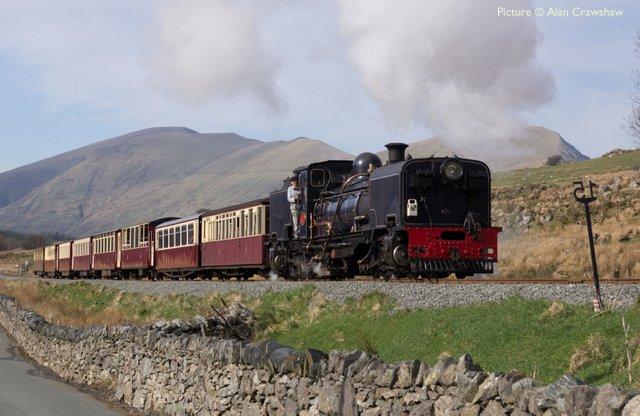
Welsh Highland Railway Beyer-Garratt 87 brings the 14:15 from Caernarfon away from Rhyd Ddu on its way to Porthmadog on 26 March. Picture by Alan Crawshaw.
Locomotives down the Coast
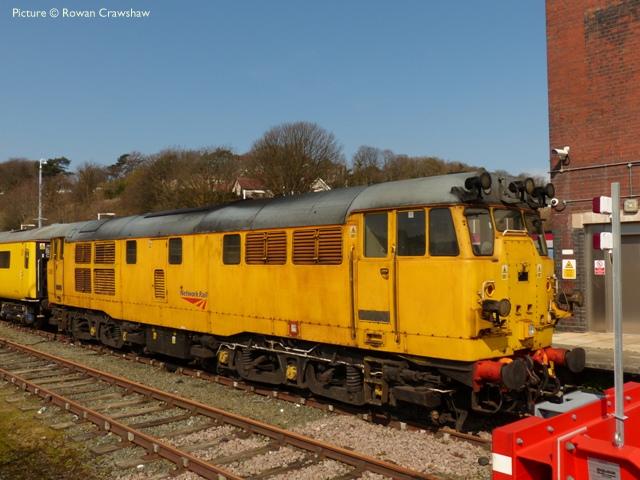
A measurement train, top-and-tailed by 31 285 (above) and 31 233 appeared in North Wales on 26 March, basking in the sun while stabled at Bangor. The train has started from Derby the previous evening, covering the Derby - Crewe line and running to Holyhead in the early hours before returning to Bangor to stable at 04:54. It spent the day in Bangor (while the crew got some sleep?) departing for Crewe at 20:39.

31 285 by day and night, Bangor, 26 March (Peter Basterfield).
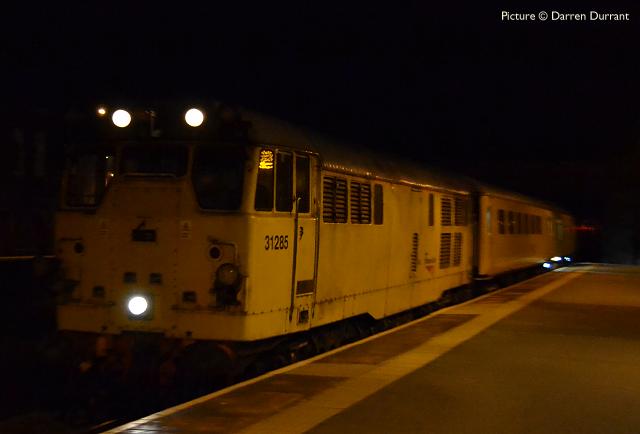
Colwyn Bay on the return run (Darren Durrant).
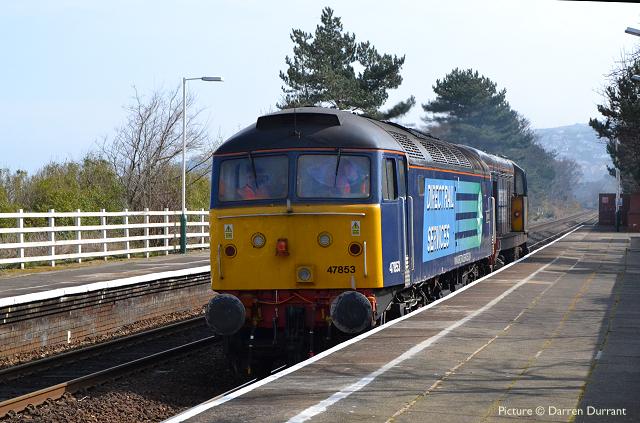
Another treat for the photographers on 26 March was a DRS training trip from Crewe to Holyhead and back, formed of 47 853 Rail Express and 20 304. Above, it is seen passing the unmistakable pine trees of Colwyn Bay, with 47 853 leading. Picture by Darren Durrant.
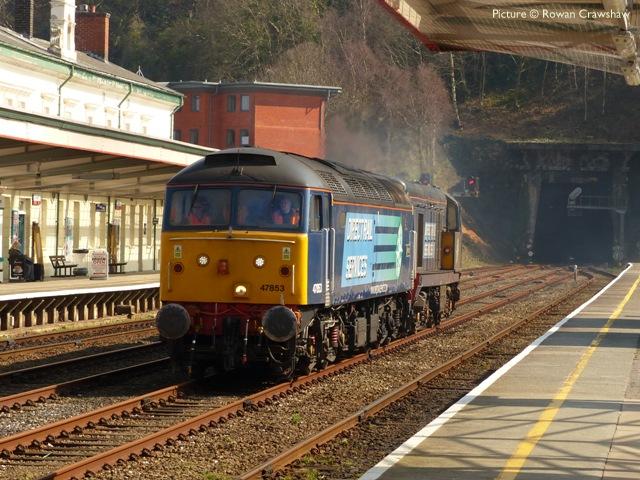
Bangor (Rowan Crawshaw).
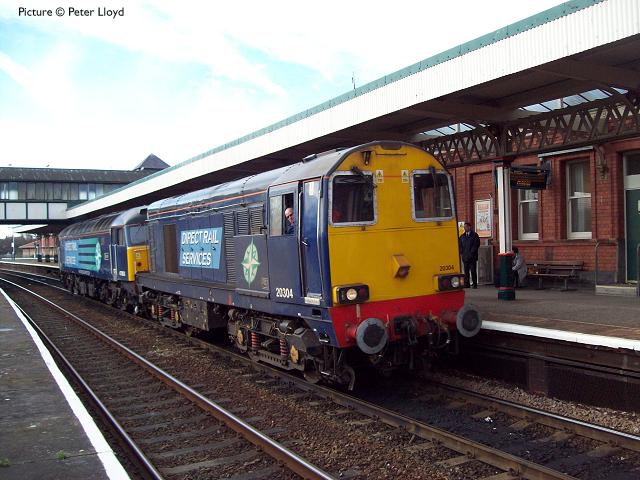
20 304 led the return working, seen at Llandudno Junction (Peter Lloyd).
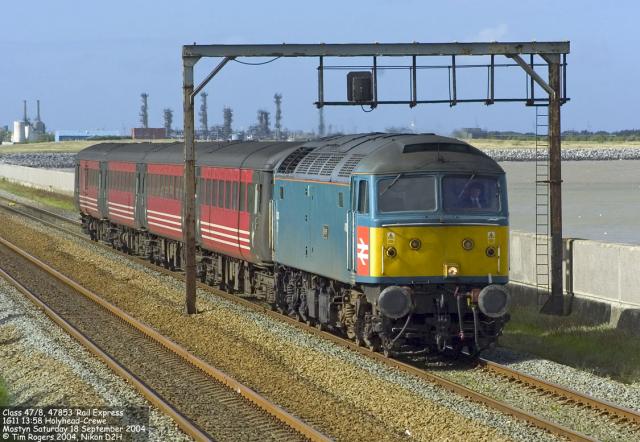
Flashback: 47 853 has been this way before in various roles: Tim Rogers photographed it (in its 'heritage' one-off livery applied by Virgin) on 18 September 2004 near Mostyn on Arriva Trains Wales 13:58 Holyhead - Crewe. Class 175 unreliability (again) compelled the then-new operator to resort to a daily loco diagram using ex-Virgin Trains equipment hired from Riviera Trains. Initially involving a Manchester services, the September timetable change saw it altered to a Crewe - Holyhead shuttle. December saw a reversion to Manchester workings, which lasted until 19 February 2005 when sister loco 47 847 worked the final day of this short era. For more about those times, we recommend a visit to Alan Crawshaw's North Wales Coast pages.
Croes Newydd comes to Llangollen
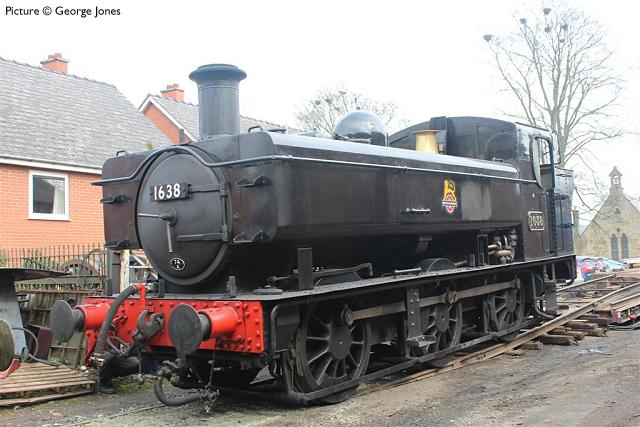
This year's spring gala on the Llangollen Railway, from Friday 4 to Sunday 6 April, is dubbed the 'Croes Newydd Special', dedicated to the former loco shed in Wrexham (coed 84J), which used to supply the motive power for the Llangollen to Corwen line. There are special appearances by appropriate visitors: GWR 'Mogul' 5322 and BR-built small pannier Tank 1638. See the Llangollen Railway website for full details.
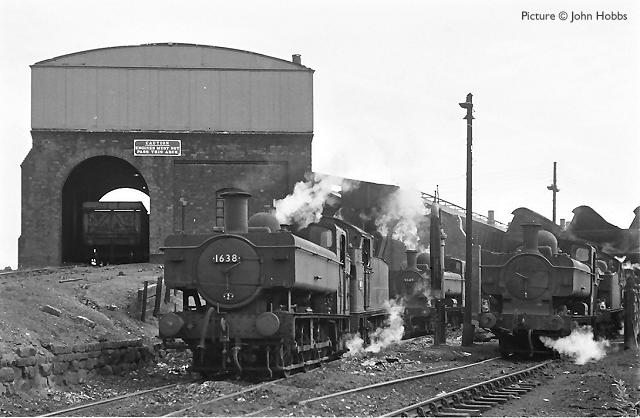
The 16xx series locos were built at Swindon works to a new lightweight design in Great Western style, after the Great Western had (officially) ceased to exist on Nationalisation in 1948. No. 1638 was first allocated to Llanelly in March 1951 and was withdrawn from service at Croes Newydd in August 1966. In another look at a John Hobbs picture we published a few weeks ago, 1638 leads the array of GWR machines in the shed yard at Croes Newydd on 3 August 1965.
Extra attractions include a freight train which will be stopping at Berwyn Station on all three days of the gala (14:19 westwards and 15:45 eastwards) to allow for demonstration loading and unloading of parcels, cases & milk churns, in a re-creation of a 'pick-up goods' train. Resident 2-8-0 3802 will also be in action. There will also be an exhibition of photographs and railwayana relating to Croes Newydd, Wrexham and Ruabon areas during the days of steam. These will be on display around the walls of Berwyn’s tea room, which will be open all three days of the gala. See Peter Dickinson's article lower down this page.
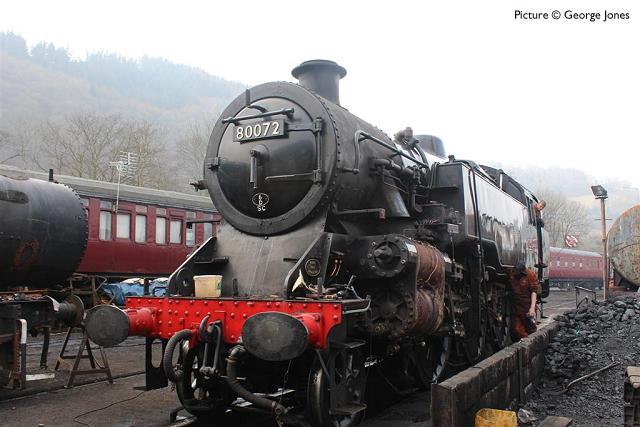
A minor loco shortage has existed on the Llangollen line of late. Former stalwart, Black 5 44806 is no longer on this line, having been sold to the North York Moors Railway. 7822 Foxcote Manor is not available for the gala as it is undergoing repairs to the firebox. However, its tender has turned black and will have BR Transfers attached whilst remaining on shed. However BR Standard tank 80072 is expected to be in service, subject a successful steam test after a prolonged repair to the left-hand cylinder which required a metal stitch and insertion of a new cylinder liner using the freeze process.
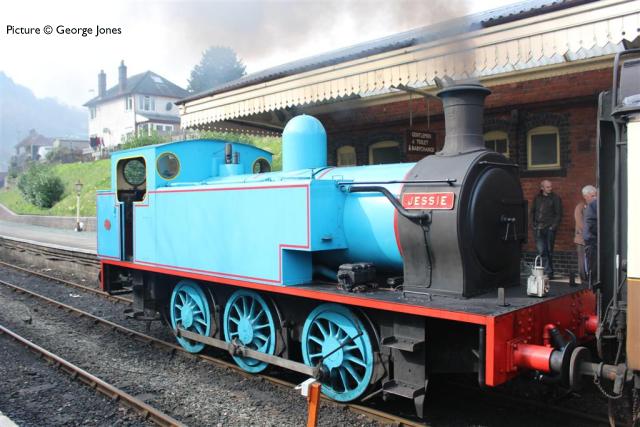
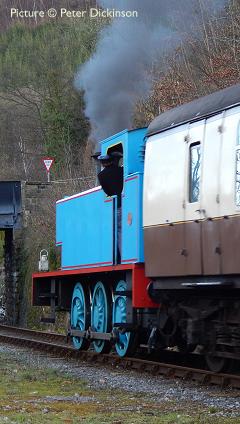
Motive power for the steam services in recent weeks has been has 0-6-0T Jessie, now running with nameplate attached to the smokebox so as to avoid confusion with her sometime 'partner' Thomas. The light blue tank engine (above) has proved very popular with the travelling public during the off-peak Sunday services as it economically handled the three-coach train through to Carrog.
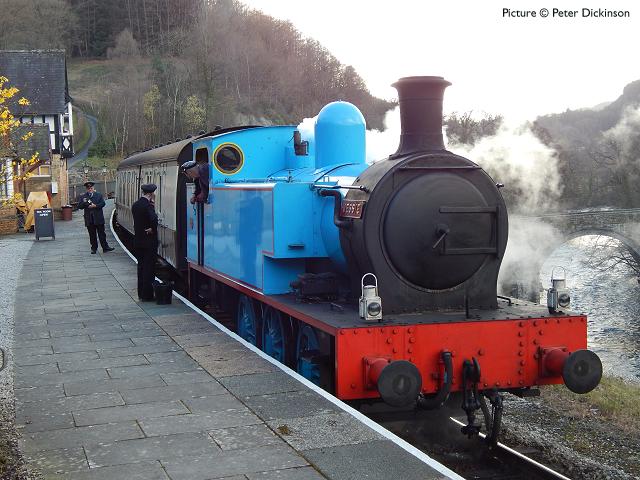
Berwyn on 23 March (Peter Dickinson). Jessie is the original name of the Hunslet-built saddle tank from which the current loco has metamorphosed. Withdwrawn by a Cardiff steelworks in 1965, it spent fifteen years as a static exhibit in a park, before being rescued by a private individual and restored to working order. It ran for some years in original saddle-tank form, except forhooler a period in 2007-9 mocked up as a side-tank, and gained its current form on overhaul in 2012.
"Daddy, that engine has the wrong name, it's - "
"Quiet, son."
Engineering trains at Chester, 29 March
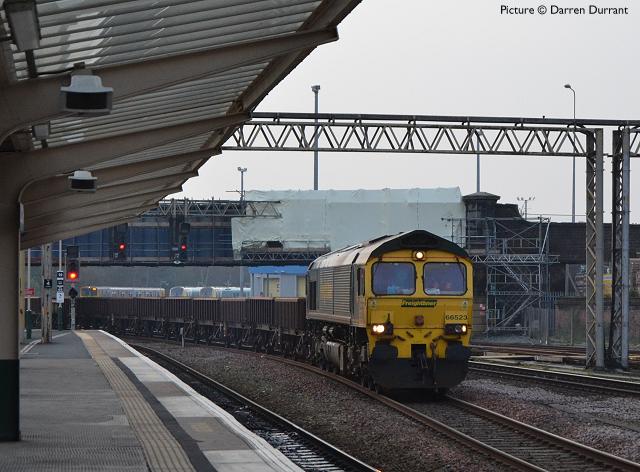
Two ballast trains in connection with the rebuilding of Saltney Junction to double track, seen returning to Crewe Basford Hall through Chester by Darren Durrant in the early evening of Saturday 29 March, while passenger services between Chester and Rhyl and between Chester and Wrexham were 'bustituted' for the weekend. Above is 66 523. Note that painting of the Hoole Road bridge is in progress in the background.
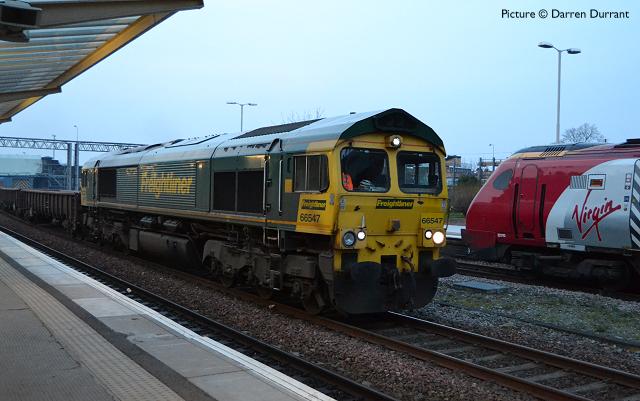
66 547 brings in the second train. In platform 4 is Virgin Trains 221 113 Sir Walter Raleigh has terminated with the 16:10 from London, and will return empty to Crewe.
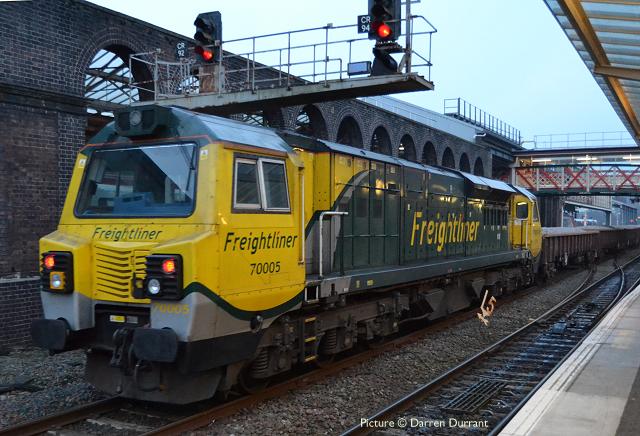
70 005 on the other end.
Saltney Junction relaid
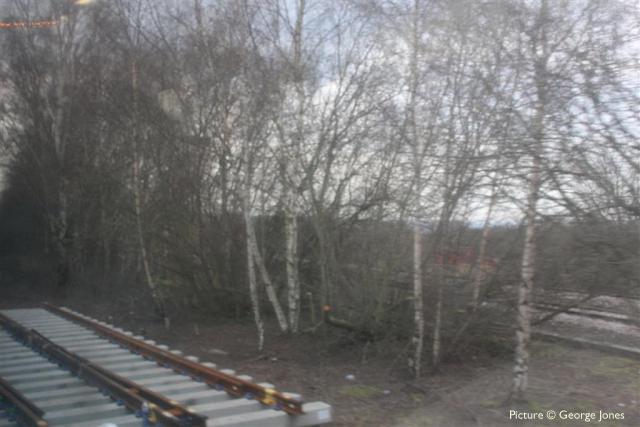
During the week of 24-28 March components for the new track could be seen waiting by the lineside near Saltney Junction ...
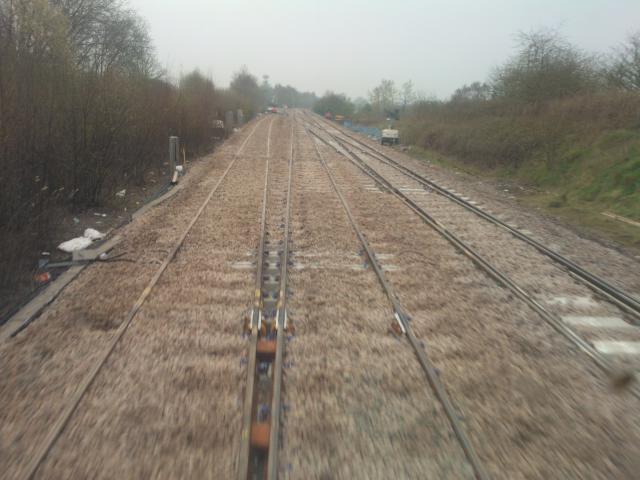
... and much progress was made over the weekend, as this view shows. The new junction, completely relaid, takes the form of a new turnout to a line which briefly runs parallel to the Holyhead route before turning off to become the new 'up' line towards Wrexham, passing the crossover which will be used by trains from Wrexham after briefly joining the 'down' coast line at the former junction site, in the distance in this picture. All tracks have been designed for 50 mph running.
This type of junction layout, which can also be seen in the remodelled layout at Cheadle Hulme where the Manchester to Crewe and Macclesfield lines diverge, makes us of stanadrd parts, and avoids the use of the traditional, but hard-to-maintain, 'diamond crossing' at a double track junction.
Rhyl, Sunday 30 March - pictures by Roly High
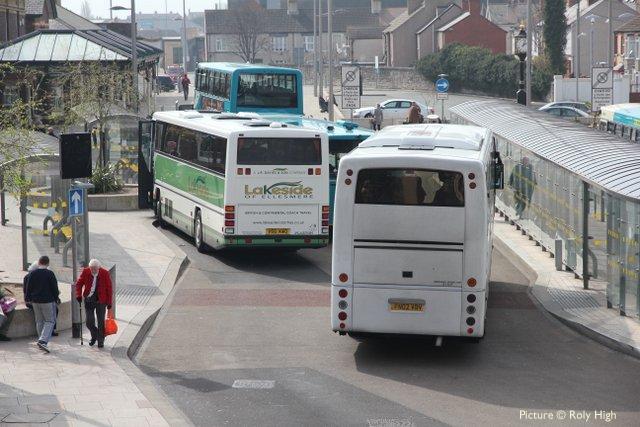
Scenes at Rhyl station during the engineering work at Saltney Junction on Sunday 30 March. The bus stands were busy with coaches running to and from Chester and Wrexham.
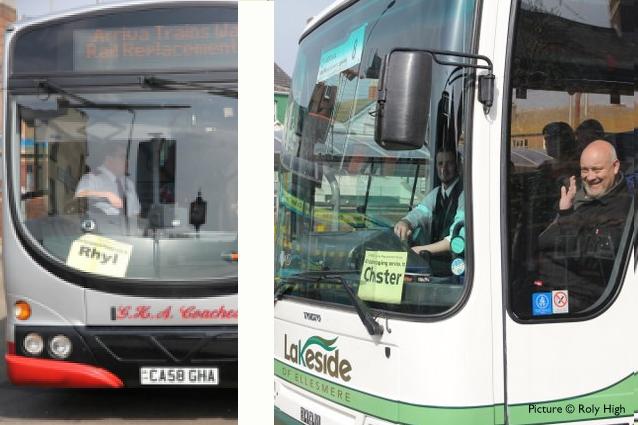
An assortment of vehicles types and operators.
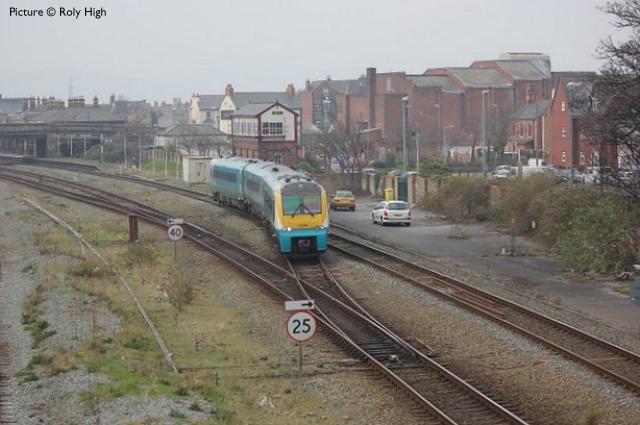
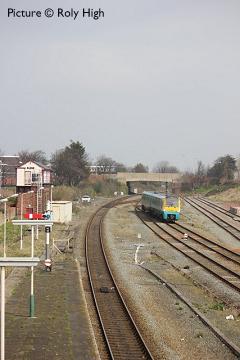
Arriva Trains Wales were providing a shuttle train service each hour between Rhyl and Holyhead: above, 175 104 has handed over its passengers to the buses and is crossing over to the 'down' line ...
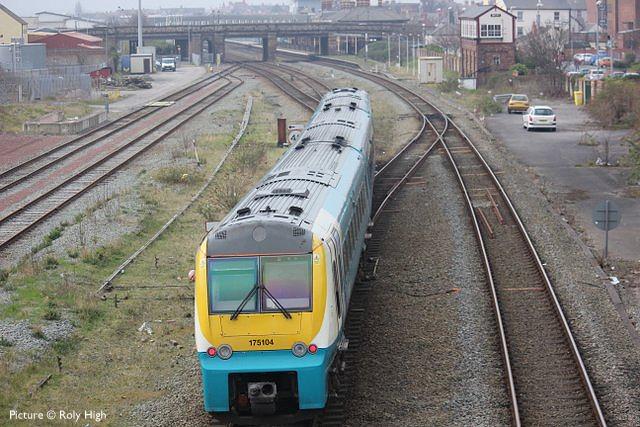
... then returning to the station to collect westbound passengers from Platform 2. It would be much easier for the passengers if it could depart from Platform 1 which is adjacent to the station exit, but the 'rationalised' track layout remaining from British Rail days does not permit this unless single-line working is implemented between Rhyl and Llandudno Junction which would require extra staff for safety reasons, and probably lead to delays.
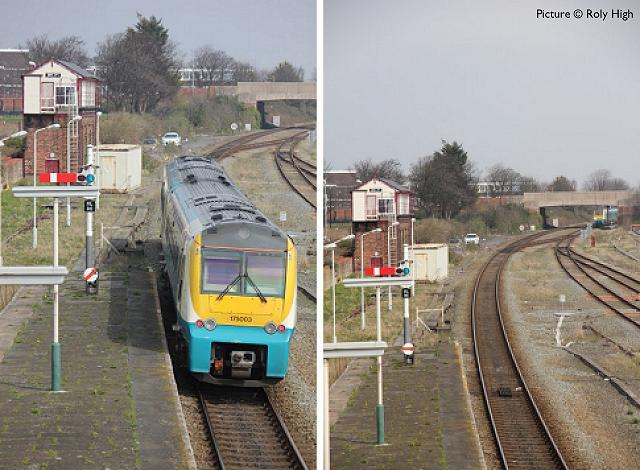
Also working the shuttle was two-car 175 003. Above (left) it heads out past the ground disk signal which is showing clear for the run across the crossover and (right) the ground signal has returned to normal while the train prepares to set back into Platform 2.
Past Times with Dennis Kerrison - Rhyl Tanks
Captions by John Hobbs
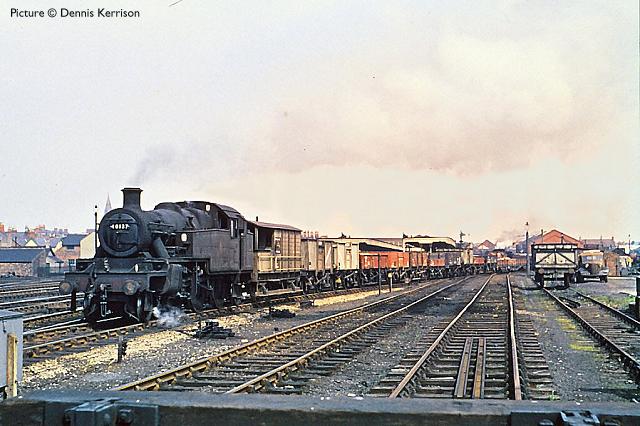
On 25 April 1962, Stanier Class 3 2-6-2T 40137 is pounding towards the head shunt at the west end of Rhyl yard while engaged in shunting. I can remember 40116 on the same job with its wheels locked up, sliding along while fly-shunting coal wagons; it must have put shocking flats on its wheels. No shunting is permitted in this manner now although I did see a similar event, with a steam locomotive in Poland in 1994!
These tanks had all gone by the end of 1962, this one lasted until the November of that year; they were not regarded as strong engines; if anything the Ivatt Class 2 tanks were regarded as better.
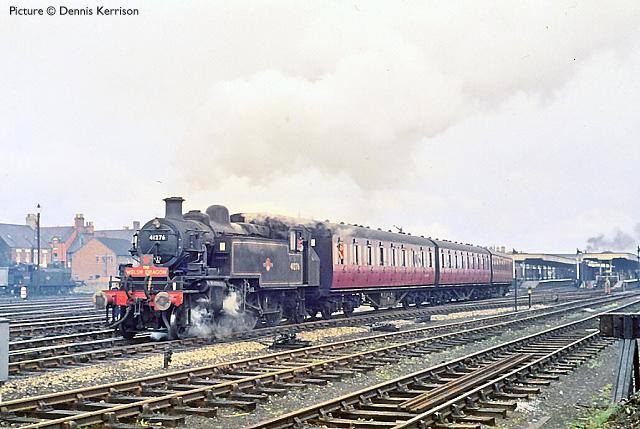
Ivatt Class 2 2-6-2T 41276 leaves Rhyl with the "Welsh Dragon" which called at all stations from Rhyl to Llandudno; it ran at roughly two-hour intervals, during the Summer Timetable, the first departure being 9.45 am. The train had been diesel railcar worked for a few years but had reverted to steam haulage; colour views of steam on this legendary service are rarely seen. [Editor's note: observe the special bracket which had been fabricated to hold the headboard on to the lower lamp brackets of the loco, the upper one on the smokebox being needed to display a lamp in the position signifying a local passenger train. The headboard (was there more than one?) is on display in the National Railway Museum.]
This train is leaving from the Denbigh bays at the west end of the station, although when I saw it, the train always departed from the west end bay on the "up" side; the first working of the day left from the "down" main platform because it had run out of the carriage shed at the east end of the station. These bays were also used to start the "Snowdonian", which ran to Llanberis, and the land cruise train from Llandudno reversed in these platform as well; I saw this arrive with a 2P 4-4-0 several times, before it was then re-engined with a Standard Class 4 4-6-0 for the circular tour via Barmouth.
Nowadays there is only one loco hauled train per day, and that is 'Push & Pull' from Holyhead to Cardiff with catering and is a corridor train as well.
Changes at Porthmadog - pictures by Greg Mape
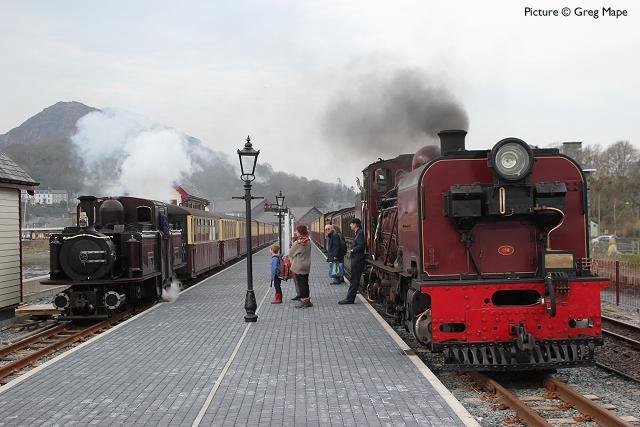
The new platform on The Cob at Porthmadog Harbour allows Ffestiniog Railway and Welsh Highland trains to be photographed together, as Greg Mape's picture (above) from 29 March shows. The Fairlie loco on the left heads a train to Blaenau Ffestiniog, whilst on the right, Garratt 138 has arrived from Caernarfon. The new Welsh Highland timetable provides for two return journeys from Caernarfon to Porthmadog per day (Blue timetable), or three on the busier days (yellow timetable). As the service is worked from the Caernarfon end, on blue days there is only one possible day trip from Porthmadog to Caernarfon, leaving at 10:45 with 70 minutes to look round Caernarfon and arriving back in 'Port' at 16:30. Yellow days offer more options, with two train sets in service, crossing at Rhyd Ddu, so a trip from Porthmadog to Beddgelert for lunch, for example, is very feasible.

The signalbox diagram, photographed by Greg Mape through the open window, shows the track layout at the new station.
CrossCountry events
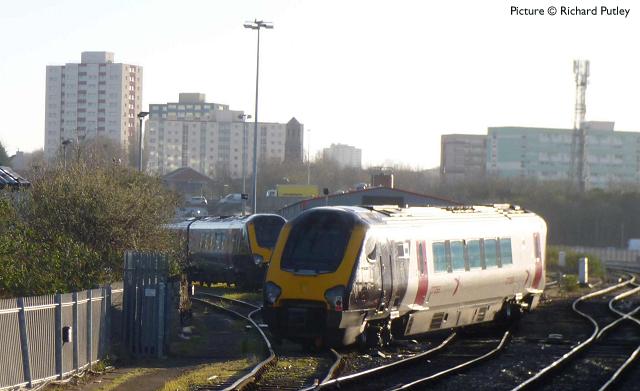
Richard Putley writes: 'As I travelled to work on 24 March aboard the 06:42 Chippenham - Swansea HST, we were greeted with the sight of derailed Super Voyager 221 129 blocking the entrance to Bristol Barton Hill depot. Owing to the blockage at Dawlish, extra Voyagers have been stabled overnight at Barton Hill. Normally 07:00 most would have left - but not on this day! When I returned home in the evening 221 129 had been re-railed but was still blocking the depot.'
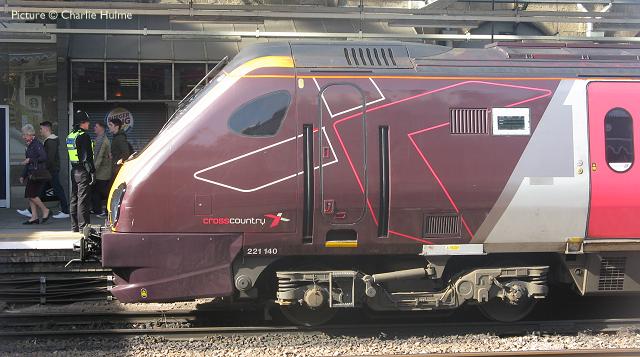
More prosaic news is that CrossCountry's Voyager units have been receiving the new-style front skirts as fitted to the Virgin Trains examples. Above, 221 140 stands at Sheffield on 15 March (Charlie Hulme).
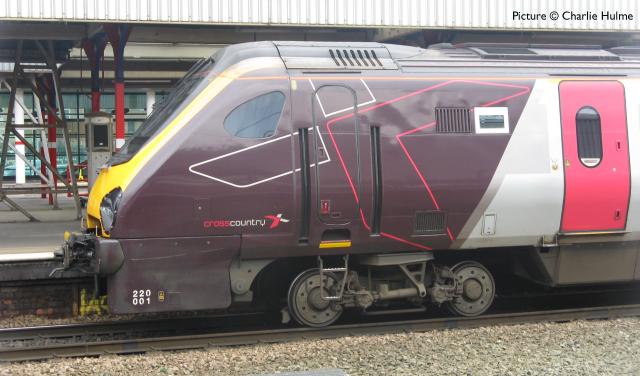
220 001, of the non-tilting variety, seen at Stockport on 19 March, still with the original style with low-down numbers. It's a curious fact that whilst Arriva's Welsh franchise carries the Arriva branding and corporate colours on everything in sight, CrossCountry, which is also an Arriva (that is to say, Deutsche Bundesbahn) operation, keeps its ownership rather quiet.
Manchester notes - by Charlie Hulme
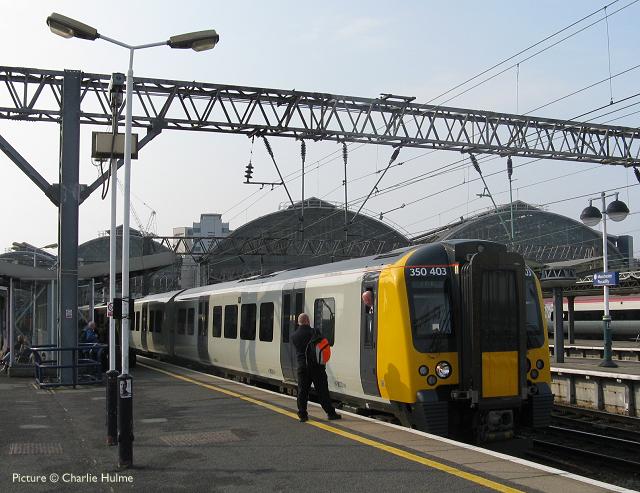
On the afternoon of 27 March, problems occurred on the newly-electrified section of the former Liverpool and Manchester Railway line, recorded as 'cable theft.' At Manchester Oxford Road, the 14:50 Manchester - Llandudno service was announced as cancelled, but shortly afterwards arrived in Platform 1 from the Piccadilly direction. While I was contemplating this situation, the 11:09 Glasgow - Manchester Airport train arrived, half an hour late having travelled haltingly past the problem, and we were told it was terminating at Manchester Piccadilly. I took the chance for a (very short) very first ride in one of the new TransPennine 350/4 electric units, two 350/4s led by 350 403, seen after arrival at Piccadilly where nobody had told the announcing system that it was terminating.
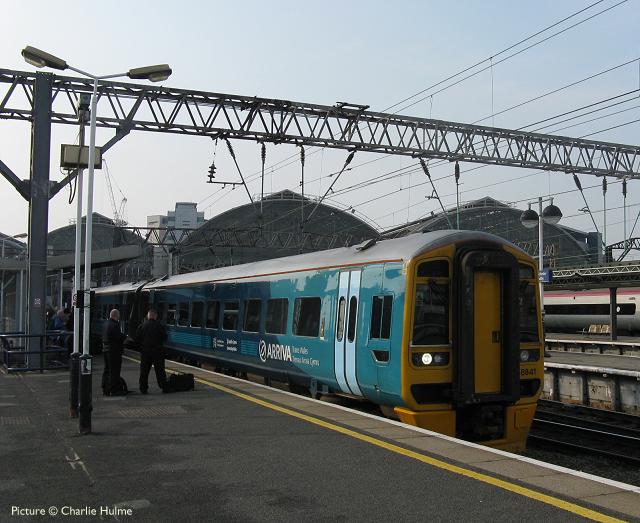
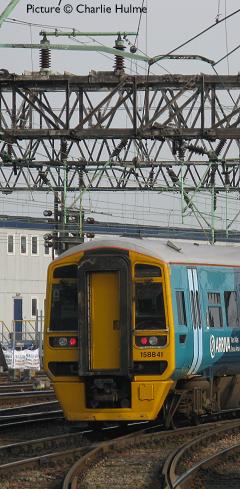
When the 350 had been moved away, along came 158 841 on the Llandudno train, having reversed at Oxford Road to take the alternative route to Chester via Stockport and Northwich. Well done to Arriva Trains Wales for organising this at very short notice. The train due from Llandudno at 14:55 never arrived; it appears to have been turned back and re-started from Warrington it the timings of the 15:50 from Manchester.
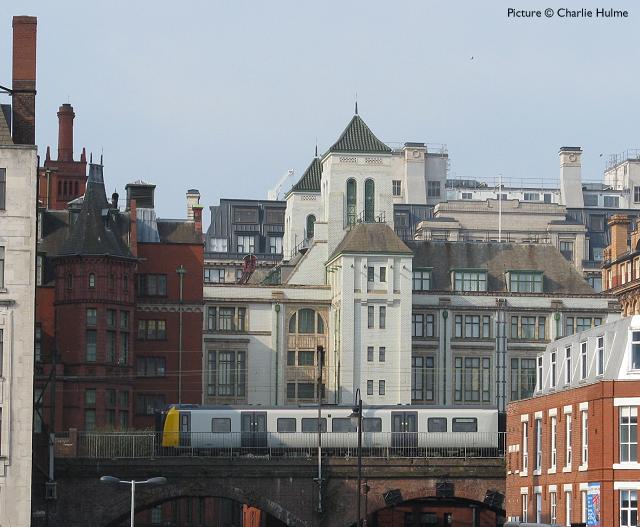
Before all this happened, I had again (see last issue) visited the car park on the old BBC site to watch some more trains in the sunshine. Above, a 350/4 heads for Scotland; delivered in the neutral colours, these should start to appear in TransPennine Express livery soon. The buildings behind the train are part of the formed Refuge Assurance offices, and behind them on the other side of Whitworth Street the roof line of Bridgewater House, built in 1912 as a shipping warehouse for Lloyd's Packing Warehouses Limited and now used as offices, including the headquarters of TransPennine Express.
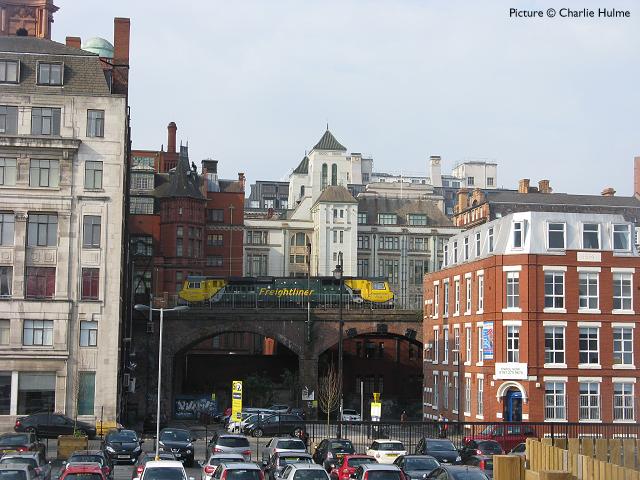
The city landscape seen from a slightly higher level, as Freightliner 70 015 makes the usual weekday light-engine move (more often a class 66) to Trafford Park to collect the 15:18 Trafford Park - Southampton freight. The South Junction line, when opened in 1849, comprised on 224 brick arches plus a number of cast iron bridges, all still in service apart from a few replaced after war damage. Evidence of strengthening work can be seen on the right-hand arch in the view.
From the Berwyn exhibition - by Peter Dickinson
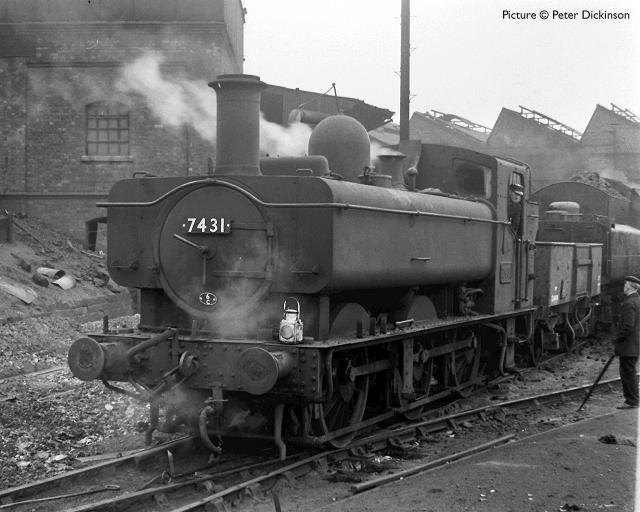
A taste of the things to be seen in the exhibition at Berwyn station tea room during the forthcoming 'Croes Newydd' gala. Above, pannier tank 7431 is seen shunting in Croes Newydd shed yard.
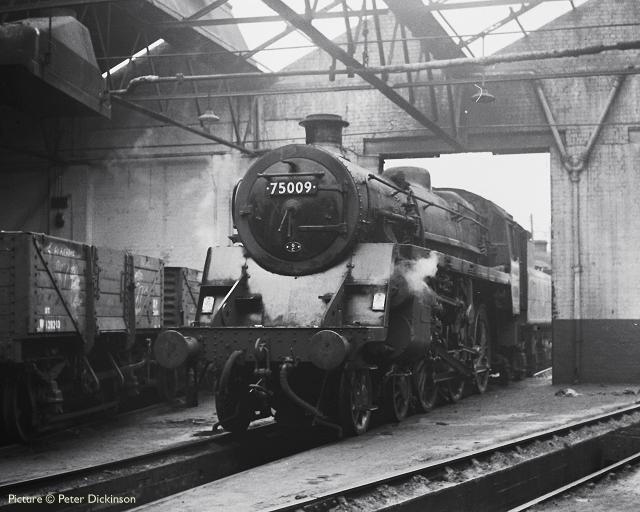
The three photographs were taken on 25 April 1964, the same day as the Ffestiniog Railway Society's AGM special; 75009 and 75023 hauled the Ruabon to Minffordd leg. 75009 is seen in Croes Newydd shed.
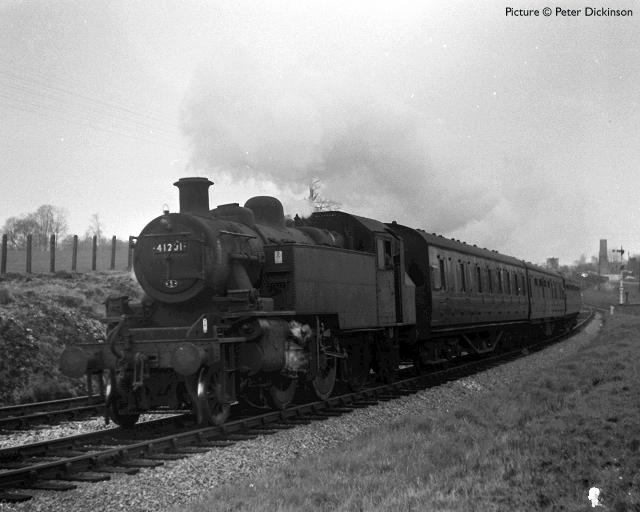
2-6-2T 41201 at Llangollen line junction; 1964 was the last year of passenger services between Ruabon and Barmouth.
Now an appeal: With the forthcoming visit of GWR Mogul 2-6-0 5322, Peter has been been researching whether there were any sightings of the loco on the Ruabon-Barmouth line during the days of steam. To date three references have been found in various publications:
The first is photograph number 16 in the Middleton Press Ruabon to Barmouth featuring Llangollen book (2010 edition) showing the 2-6-0 departing from Llangollen in 1957 with an eastbound working. Interestingly, the BRDatabase.info website has the loco's shed allocation for 1956-58 as being 81E Didcot. On Saturday 21 July 1962 5322 worked a relief Dolgellau to Wrexham service comprised of 3 coaches (Chris Magner, 2012); On Saturday 28 July 1962 it worked a relief Pwllheli train along with 6370, both being Pontypool Road engines (Chris Magner, 2012).
It would be interesting to find out whether 5322 made any more visits to North Wales as it was allocated to Pontypool Road from 1959-1964. Also, if any readers can offer any more information about the photographs then please contact us.
Class 70 News - pictures by Richard Putley

Freed from their temporary imprisonment on the dockside, the new Colas Class 70s have become a common sight on engineering trains in the Westbury area Westbury. On Monday 14 March (above) 70 805 headed a Westbury - Bescot engineers train through Chippenham ...
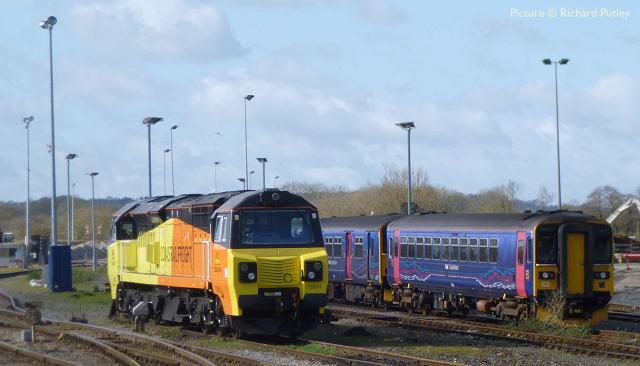
... and on Sunday 23 March 70 804 was at Westbury.
North Wales Coast home page | Archive | Previous Notice Board